
Cardiology Is Moving Beyond Episodic Care
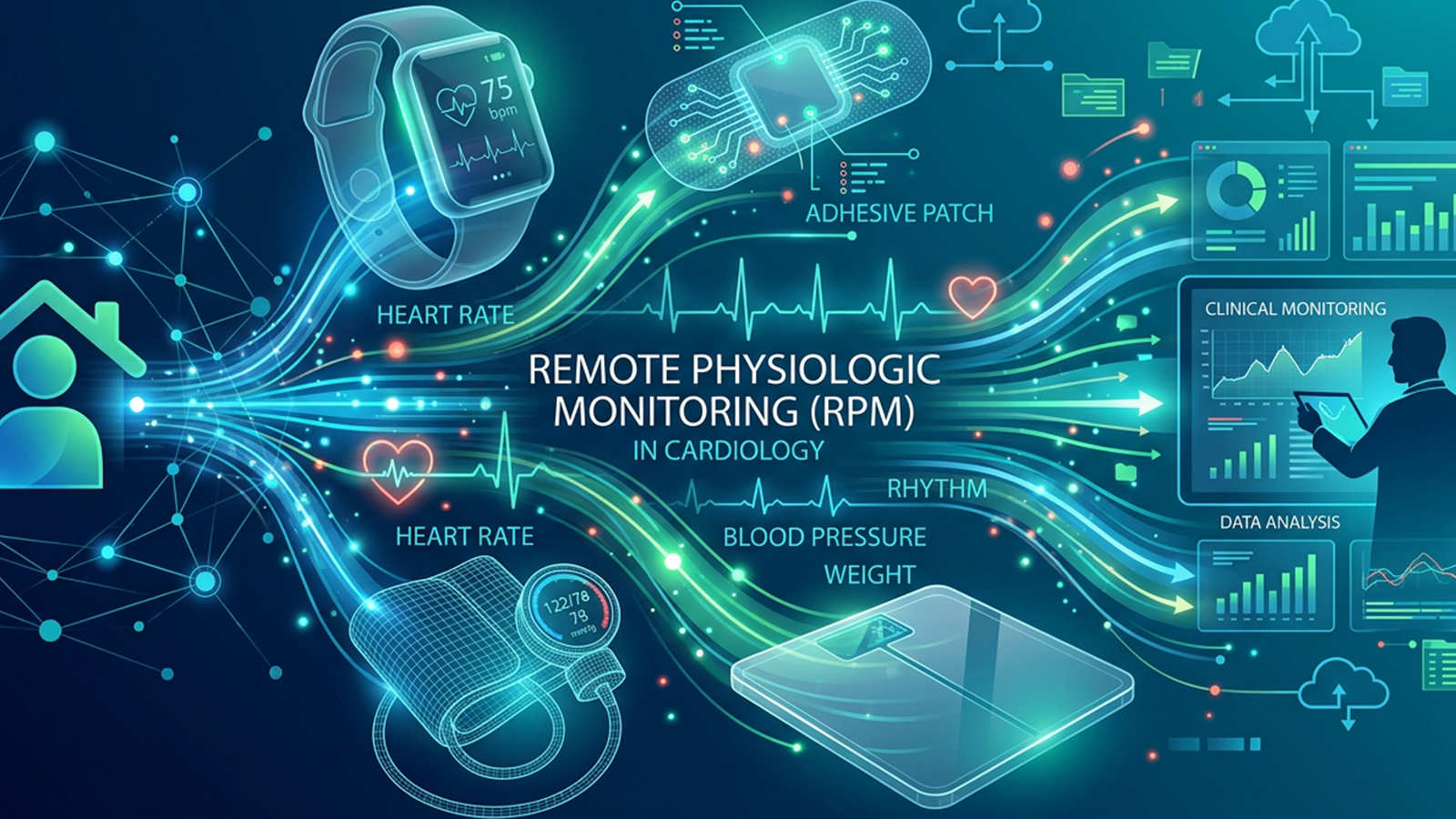
Cardiology is rapidly transitioning away from traditional episodic office-based care toward longitudinal, data-driven disease management models. In this environment, remote physiologic monitoring (RPM) has become one of the most important operational and reimbursement developments in cardiovascular medicine. RPM allows cardiology practices to continuously monitor physiologic data from patients outside the clinic, enabling earlier intervention, improved chronic disease management, reduced hospitalizations, and expanded outpatient surveillance.
What initially began as a telehealth-adjacent service has now evolved into a major reimbursement category that intersects with chronic care management, digital health infrastructure, outpatient population management, preventive cardiology, and value-based care initiatives.
For cardiology practices, RPM is no longer simply a technology tool. It is increasingly becoming a major operational revenue stream.
What Is RPM?
Remote physiologic monitoring involves the collection, transmission, and physician review of physiologic data obtained outside traditional clinical settings. These data are digitally transmitted from patients’ homes or wearable devices into monitoring systems integrated with clinical workflows.
In cardiology, RPM commonly includes monitoring of:
- Blood pressure
- Heart rate
- Oxygen saturation
- Weight
- Cardiac rhythm
- Heart failure metrics
- Activity levels
- Implantable device data
- Arrhythmia burden
The primary goal is to identify clinical deterioration earlier, intervene before hospitalization becomes necessary, and maintain continuous surveillance of chronic cardiovascular disease.
Cardiology is particularly well suited for RPM because many cardiovascular conditions require ongoing longitudinal monitoring rather than isolated office encounters.
The Key RPM CPT Codes
Several RPM codes remain operationally important in 2026:
- 99453 — Initial setup and patient education on equipment use
- 99454 — Device supply and transmission of physiologic data
- 99457 — First 20 minutes of treatment management services
- 99458 — Additional 20 minutes of management services
These codes may appear straightforward on paper, but operational execution is far more complex.
Reimbursement depends heavily on:
- Accurate documentation
- Data transmission consistency
- Interactive communication requirements
- Clinical staff involvement
- Physician supervision
- Medical necessity
- Time tracking
- Patient engagement workflows
Many practices underutilize RPM because they underestimate the infrastructure required to support compliant monitoring programs.
Why RPM Matters Financially
RPM represents one of the largest shifts in outpatient cardiology reimbursement because it creates recurring longitudinal revenue rather than isolated procedural reimbursement.
Traditionally, cardiology revenue relied heavily on:
- Imaging
- Procedures
- Stress testing
- Catheterization
- Device implantation
- Inpatient care
RPM shifts portions of reimbursement toward:
- Ongoing outpatient management
- Digital surveillance
- Preventive intervention
- Longitudinal patient relationships
This becomes particularly important as CMS and commercial payers continue pressuring procedural reimbursement and encouraging outpatient management models.
RPM also aligns well with:
- Accountable care organizations
- Population health initiatives
- Readmission reduction programs
- Heart failure management strategies
- Value-based care contracts
Practices that build efficient RPM infrastructure may create substantial recurring revenue opportunities while improving patient outcomes simultaneously.
Operational Challenges in RPM
While RPM offers major opportunities, operational complexity is often underestimated. The biggest RPM failures usually occur because practices implement devices without building:
- Workflow infrastructure
- Clinical escalation protocols
- Documentation systems
- Staff responsibilities
- Physician review processes
- Patient engagement pathways
RPM is not passive revenue. Successful programs require:
- Consistent patient onboarding
- Data review workflows
- Clinical escalation protocols
- Documentation specificity
- Staff training
- Billing oversight
- Compliance monitoring
Practices frequently lose revenue because:
- Data is transmitted inconsistently
- Documentation does not support billing
- Interactive communication requirements are not met
- Time thresholds are missed
- Staff roles are poorly defined
This creates silent operational revenue leakage.
The Future of RPM in Cardiology
The future of cardiology increasingly involves continuous outpatient surveillance rather than isolated episodic visits.
RPM is expected to expand further into:
- AI-supported deterioration prediction
- Automated risk stratification
- Wearable integration
- Predictive heart failure management
- Digital hypertension clinics
- Outpatient arrhythmia management
- Remote post-procedural care
Final Perspective
As healthcare shifts toward preventive and longitudinal disease management, RPM will likely become increasingly central to cardiovascular operational strategy. For cardiology practices, the financial winners will not simply be the groups purchasing monitoring devices. The winners will be the groups capable of integrating technology, workflow efficiency, physician oversight, documentation, patient engagement, and reimbursement strategy into a scalable operational infrastructure.
Pract-Eaze
Pract-Eaze works with private practices, healthcare organizations, and healthcare technology partners to strengthen revenue performance by aligning workflows, improving visibility, and ensuring that systems translate into measurable financial outcomes.
📞 (724) 512 5777
✉️ info@pract-eaze.com
🌐 www.pract-eaze.com
Dr. Renu Joshi, MD, EMBA, FACOG
OB-GYN | Private Practice Physician | Physician-Entrepreneur
Founder, Pract-Eaze
Recent Posts
The most recent content on our blog, showcasing a variety of articles, insights, and resources to inform and inspire our readers.
-

Prior Authorizations: The Administrative Crisis quietly draining Healthcare
What began as a payer cost-control mechanism has evolved into one of the largest administrative…
-

The Most Expensive Word in Healthcare is “Denied”
Denials are not simply billing problems. They are operational failures with direct financial consequences.
-

AI vs. Human Revenue Cycle Management: What the evidence actually shows
An important operational question for healthcare organizations: is AI actually outperforming human revenue cycle management?
