Artificial Intelligence Is Rapidly Entering Cardiovascular Care
Artificial intelligence is no longer a futuristic concept in cardiology. AI-supported technologies are increasingly being integrated into echocardiography, cardiac CT, nuclear cardiology, rhythm analysis, wearable monitoring systems, predictive cardiovascular surveillance, and outpatient monitoring workflows. However, despite rapid technological growth, reimbursement structures surrounding AI in cardiology remain far more complex and less standardized than many practices realize.
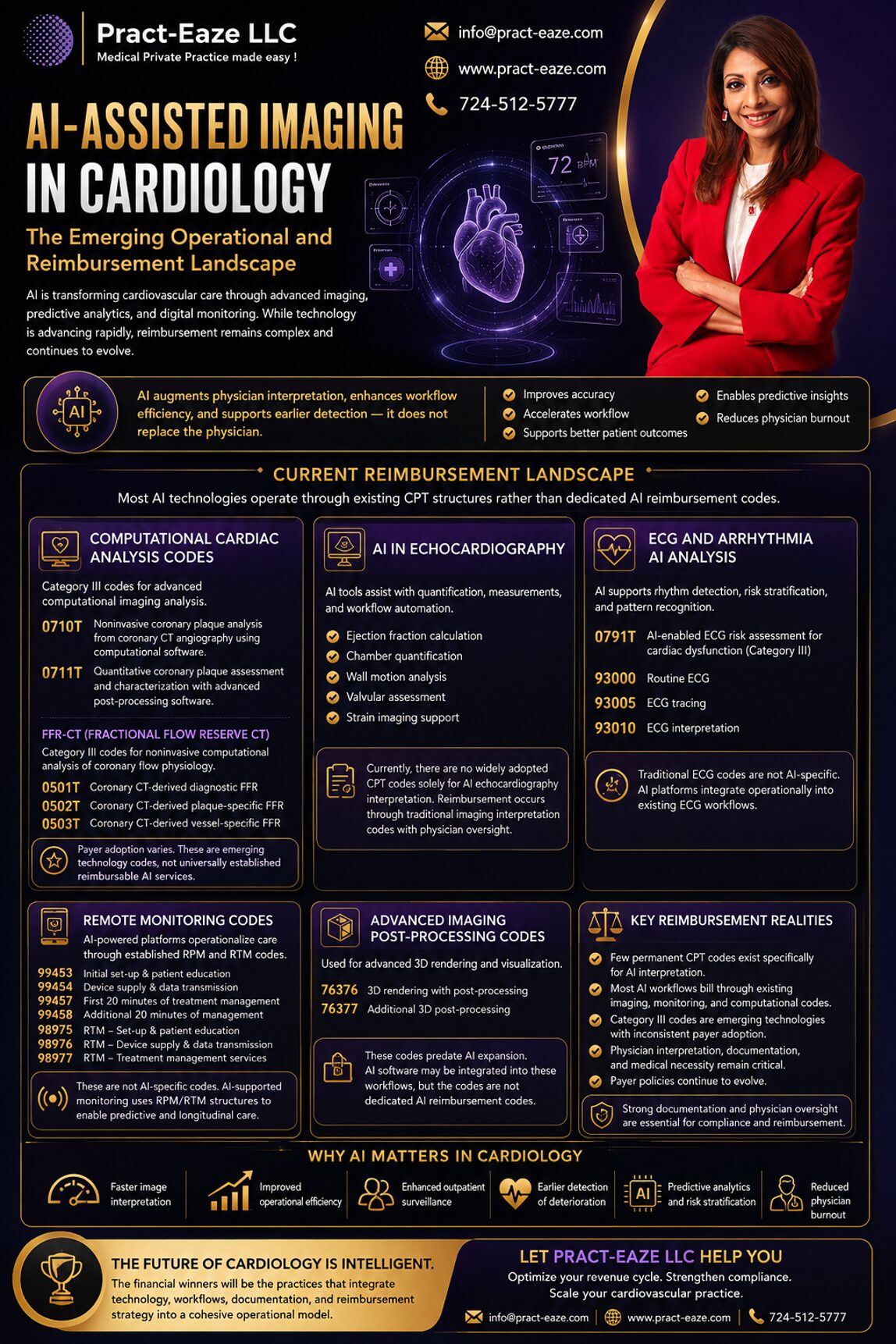
One of the most important misconceptions surrounding AI in healthcare is the assumption that there are already widespread dedicated CPT reimbursement pathways specifically for “AI interpretation.” In reality, most cardiovascular AI technologies currently operate through existing reimbursement structures involving computational analysis, advanced imaging post-processing, remote monitoring, physician interpretation services, and Category III emerging technology codes rather than standalone permanent AI reimbursement pathways.
As a result, cardiology practices increasingly face a rapidly evolving operational environment where technology is advancing faster than reimbursement policy.
What Is AI-Assisted Imaging in Cardiology?
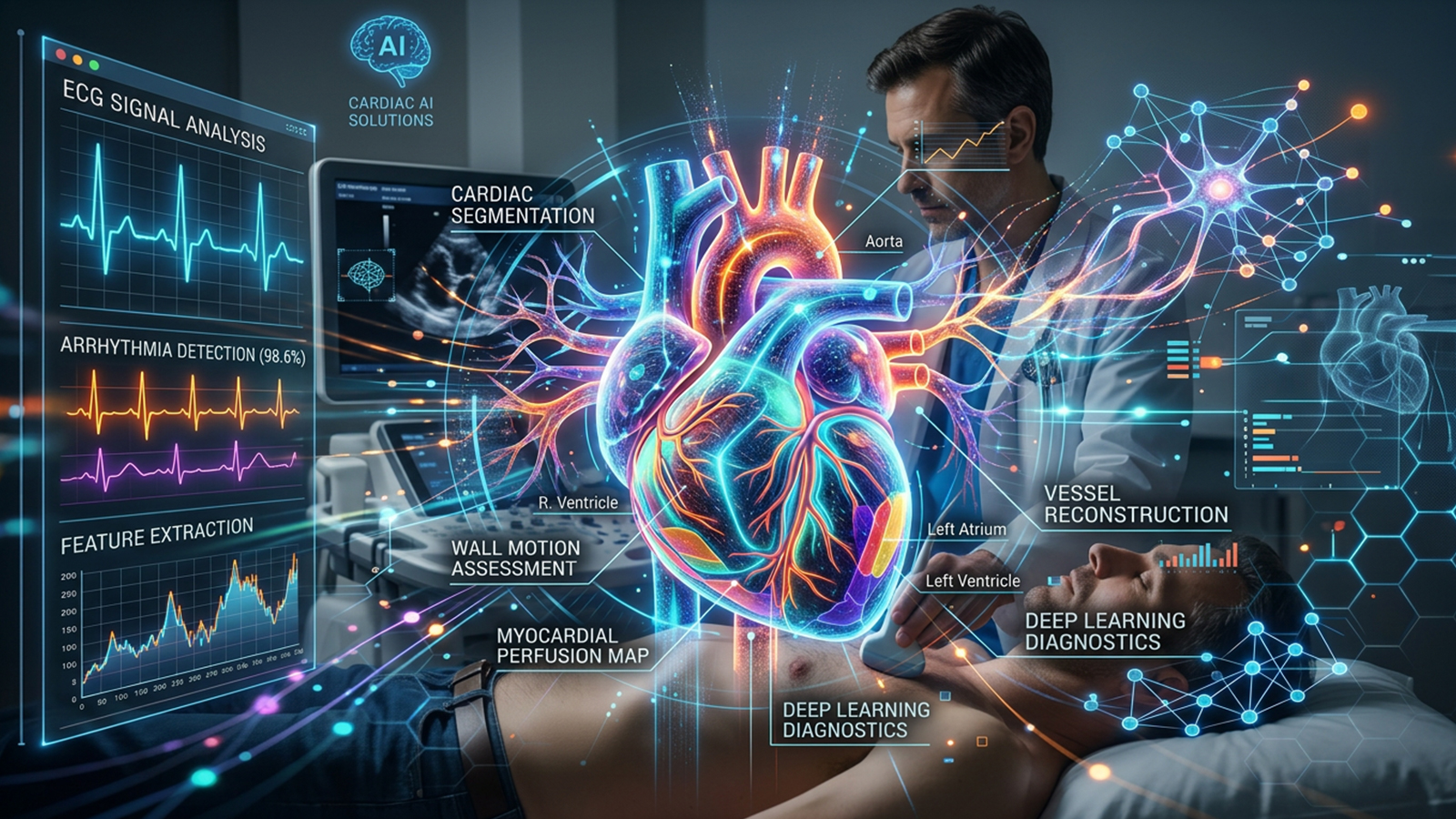
AI-assisted cardiovascular imaging refers to the use of machine learning algorithms and advanced computational software to assist physicians in analyzing cardiovascular data, identifying abnormalities, quantifying findings, and improving workflow efficiency. These technologies may assist with:
- Coronary plaque analysis
- Ejection fraction quantification
- Wall motion assessment
- Arrhythmia detection
- Perfusion analysis
- Chamber measurements
- Valvular disease evaluation
- Predictive deterioration modeling
- Risk stratification
Importantly, AI generally does not replace physician interpretation. Instead, it augments physician workflow, improves efficiency, supports clinical prioritization, and assists with data analysis.
AI systems are increasingly integrated into:
- Echocardiography platforms
- Cardiac CT systems
- Nuclear cardiology workflows
- Wearable monitoring devices
- Remote rhythm monitoring systems
- Outpatient cardiovascular surveillance platforms
The greatest operational value of AI may not simply be diagnostic enhancement. It may be workflow scalability, faster interpretation, improved outpatient surveillance, predictive analytics, and reduced physician burnout.
Current CPT and Category III Codes
Associated With Advanced Computational Cardiovascular Analysis
Coronary Plaque and Cardiac CT Computational Analysis
Several Category III CPT codes currently support advanced computational cardiovascular imaging analysis, particularly in coronary CT and plaque quantification workflows.
0710T
Noninvasive coronary plaque analysis derived from coronary CT angiography datasets using advanced computational software analysis.
0711T
Quantitative coronary plaque assessment and characterization using advanced post-processing computational software.
These codes are real Category III codes and represent some of the clearest examples of computational cardiovascular imaging reimbursement pathways. However, they should not be broadly described as universal “AI reimbursement” codes because payer adoption remains highly variable and reimbursement standardization is still evolving.
Many payers continue treating these technologies as emerging computational analysis services rather than universally established reimbursable AI workflows.
Fractional Flow Reserve CT (FFR-CT)
One of the strongest examples of advanced computational cardiology reimbursement involves FFR-CT analysis.
Category III Codes:
- 0501T
- 0502T
- 0503T
These codes support noninvasive computational analysis of coronary flow physiology derived from coronary CT imaging datasets.
FFR-CT technologies use advanced computational modeling to estimate coronary blood flow dynamics without requiring invasive catheterization. While not always labeled specifically as “AI,” these technologies represent the broader evolution toward computational cardiovascular medicine.
These codes predate the current AI boom but remain highly relevant because they demonstrate how advanced computational analysis is gradually becoming integrated into cardiovascular reimbursement models.
AI and Echocardiography
AI-supported echocardiographic quantification is becoming increasingly common operationally. Many modern echocardiography platforms now include:
- Automated ejection fraction calculations
- Chamber quantification
- Wall motion analysis
- Valvular measurements
- Strain imaging support
- Workflow automation tools
However, one of the most important compliance considerations is that there are currently very limited widely adopted permanent CPT reimbursement pathways specifically dedicated to AI echocardiographic interpretation itself.
Many online discussions incorrectly imply that broad AI-specific echocardiography reimbursement is already fully standardized. In reality, reimbursement generally continues to occur through traditional imaging interpretation pathways while AI functions operate as workflow-support technologies integrated into those services.
As a result, physician interpretation, oversight, and documentation remain central to reimbursement.
ECG and AI-Supported Arrhythmia Analysis
AI-supported ECG analysis and arrhythmia detection represent another rapidly evolving area within cardiology.
Certain emerging Category III technologies involve:
- Automated rhythm analysis
- Cardiac dysfunction risk prediction
- AI-supported ECG pattern recognition
- Predictive cardiovascular analytics
Traditional ECG CPT codes such as:
- 93000
- 93005
- 93010
remain standard ECG reimbursement pathways.
Importantly, these are not AI-specific codes themselves. However, AI-supported interpretation platforms may become operationally integrated into workflows billed under these traditional ECG services.
This distinction matters significantly from a compliance and coding perspective.
RPM, RTM, and AI-Enabled Monitoring
One of the most important areas where AI is operationally intersecting with reimbursement is remote monitoring.
Remote physiologic monitoring (RPM) and remote therapeutic monitoring (RTM) codes include:
- 99453
- 99454
- 99457
- 99458
- 98975
- 98976
- 98977
These are legitimate and operationally important monitoring codes. However, they are not AI-specific reimbursement codes.
Instead, many modern AI-supported cardiovascular monitoring platforms utilize these existing RPM and RTM reimbursement structures to operationalize:
- Predictive surveillance
- Remote deterioration detection
- Longitudinal cardiovascular management
- Digital outpatient monitoring
- Preventive intervention workflows
In other words, AI technologies are increasingly functioning within existing monitoring reimbursement frameworks rather than through standalone AI billing structures.
Advanced Imaging Post-Processing Codes
Additional advanced imaging post-processing codes include:
- 76376
- 76377
These codes support:
- 3D rendering
- Advanced visualization
- Image post-processing workflows
Although AI-supported software may become integrated into these workflows, the codes themselves are not dedicated AI reimbursement codes and significantly predate the current AI expansion in healthcare.
This distinction is important because many healthcare articles incorrectly label all advanced imaging post-processing as “AI reimbursement.”
Why AI Matters Operationally
The largest operational value of AI in cardiology may involve:
- Faster image interpretation
- Workflow acceleration
- Improved scalability
- Reduced physician burnout
- Automated prioritization
- Earlier detection of deterioration
- Enhanced outpatient monitoring
- Predictive analytics
- Population cardiovascular surveillance
Cardiology faces increasing:
- Imaging volumes
- Documentation burden
- Physician shortages
- Outpatient management complexity
- Remote monitoring demands
AI-supported workflows may help practices manage these pressures more efficiently. However, technology alone does not guarantee financial success.
The Reimbursement and Compliance Challenge
One of the biggest financial misconceptions in healthcare is the assumption that AI automatically creates new reimbursable revenue streams.
In reality, reimbursement remains highly dependent on:
- Physician oversight
- Documentation quality
- Medical necessity
- Workflow integration
- Payer adoption
- Compliance infrastructure
CMS and commercial payers continue evaluating:
- Clinical validation
- Outcome improvement
- Cost-effectiveness
- Physician involvement
- Patient safety
- Oversight requirements
As a result, AI reimbursement adoption remains inconsistent across the industry.
Practices that fail to operationalize AI appropriately may face:
- Compliance exposure
- Denials
- Documentation deficiencies
- Technology waste
- Poor ROI
- Workflow inefficiency
The Future of AI in Cardiology
AI is expected to continue expanding into:
- Predictive heart failure surveillance
- Automated arrhythmia detection
- Population cardiovascular analytics
- Imaging automation
- Remote monitoring integration
- Digital cardiovascular triage
- Outpatient preventive surveillance
Over time, reimbursement pathways will likely evolve alongside these technologies. However, the current environment remains operationally transitional rather than fully standardized.
Final Perspective
The future financial winners in cardiology will likely not simply be the practices adopting AI software.
The winners will be the groups capable of integrating:
- Technology
- Physician oversight
- Documentation
- Workflow efficiency
- Compliance infrastructure
- Remote monitoring systems
- Revenue-cycle strategy
into a cohesive operational model.
The future of cardiovascular medicine is unlikely to be physician replacement. It is far more likely to involve physician-led integration of AI-supported operational infrastructure.
Pract-Eaze
Pract-Eaze works with private practices, healthcare organizations, and healthcare technology partners to strengthen revenue performance by aligning workflows, improving visibility, and ensuring that systems translate into measurable financial outcomes.
📞 (724) 512 5777
✉️ info@pract-eaze.com
🌐 www.pract-eaze.com
Dr. Renu Joshi, MD, EMBA, FACOG
OB-GYN | Private Practice Physician | Physician-Entrepreneur
Founder, Pract-Eaze
Recent Posts
The most recent content on our blog, showcasing a variety of articles, insights, and resources to inform and inspire our readers.
-

Prior Authorizations: The Administrative Crisis quietly draining Healthcare
What began as a payer cost-control mechanism has evolved into one of the largest administrative…
-

The Most Expensive Word in Healthcare is “Denied”
Denials are not simply billing problems. They are operational failures with direct financial consequences.
-

AI vs. Human Revenue Cycle Management: What the evidence actually shows
An important operational question for healthcare organizations: is AI actually outperforming human revenue cycle management?